
Risk Self-Assessment Exercise (Run & Monitor Operations)   38-page PDF document
$29.00

Risk Self-Assessment Exercise (Run & Monitor Operations) (38-page PDF document) Preview Image
Log in to unlock full preview.
Risk Self-Assessment Exercise (Run & Monitor Operations) (38-page PDF document) Preview Image
Arrow   Click main image to view in full screen.

Risk Self-Assessment Exercise (Run & Monitor Operations) (PDF)

PDF document 38 Pages

$29.00
Based on work with Citibank, Bank of Tokyo Mitsubishi, and Capgemini, this assessment is developed by a Global Risk Leader and founder of the world's largest Risk Management community. SOX, ITIL, FFIEC, BS25999, ISO 17799/27001 compliant.
Add to Cart


Immediate download
Editable with PDF editor
Free lifetime updates

RISK MANAGEMENT PDF DESCRIPTION

Editor Summary Risk Self-Assessment Exercise (Run & Monitor Operations) is a 38-page PDF risk assessment developed by Boris Agranovich, a Global Risk Leader, and based on work with Citibank, Bank of Tokyo Mitsubishi, and Capgemini. Read more

A Risk Self-Assessment Exercise is a process of evaluating an organization's Risk Management practices and identifying areas where improvements can be made. It typically involves reviewing the organization's current Risk Management processes and procedures, identifying any gaps or weaknesses, and developing recommendations for improving risk management practices.

A Risk Self-Assessment can be conducted internally, by the organization's own staff, or it can be conducted by an external party, such as a consultant or a third-party Risk Management firm.

The goal of the Risk Self-Assessment Exercise is to help an organization identify and address any weaknesses in its risk management practices, so that it can better protect itself against potential risks and threats.

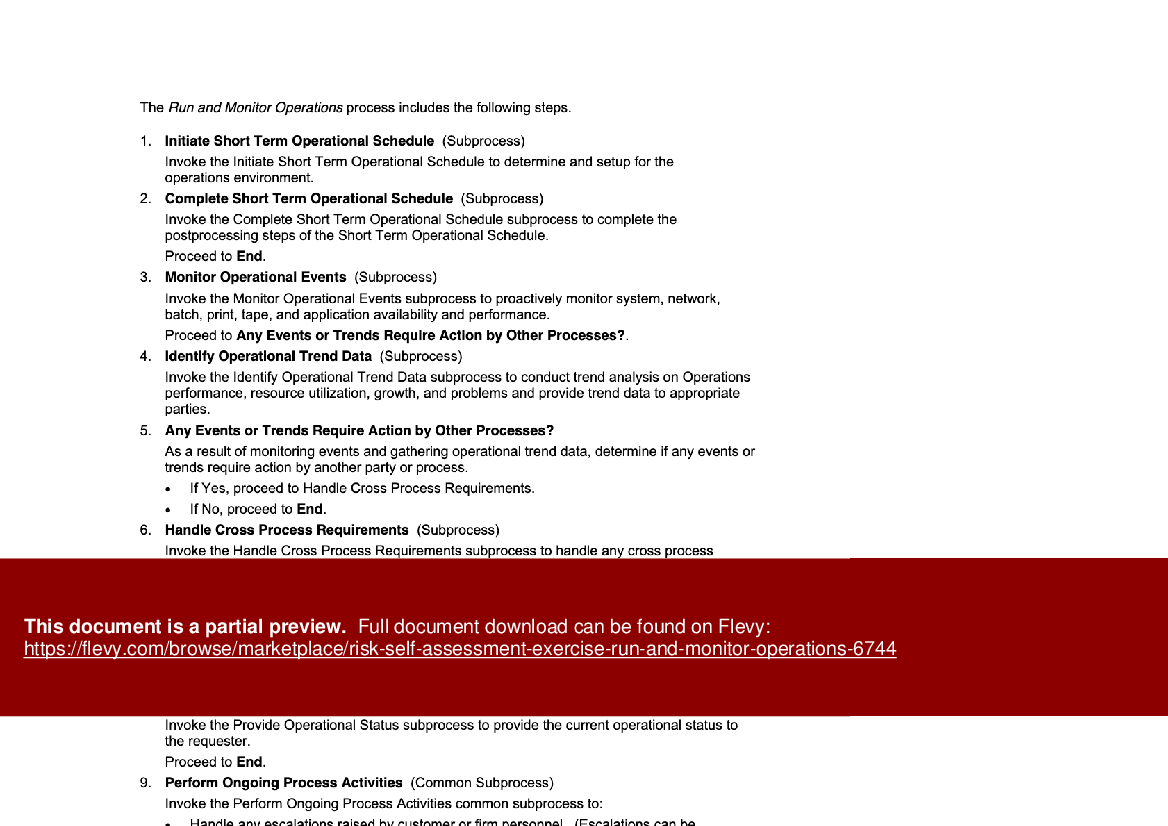
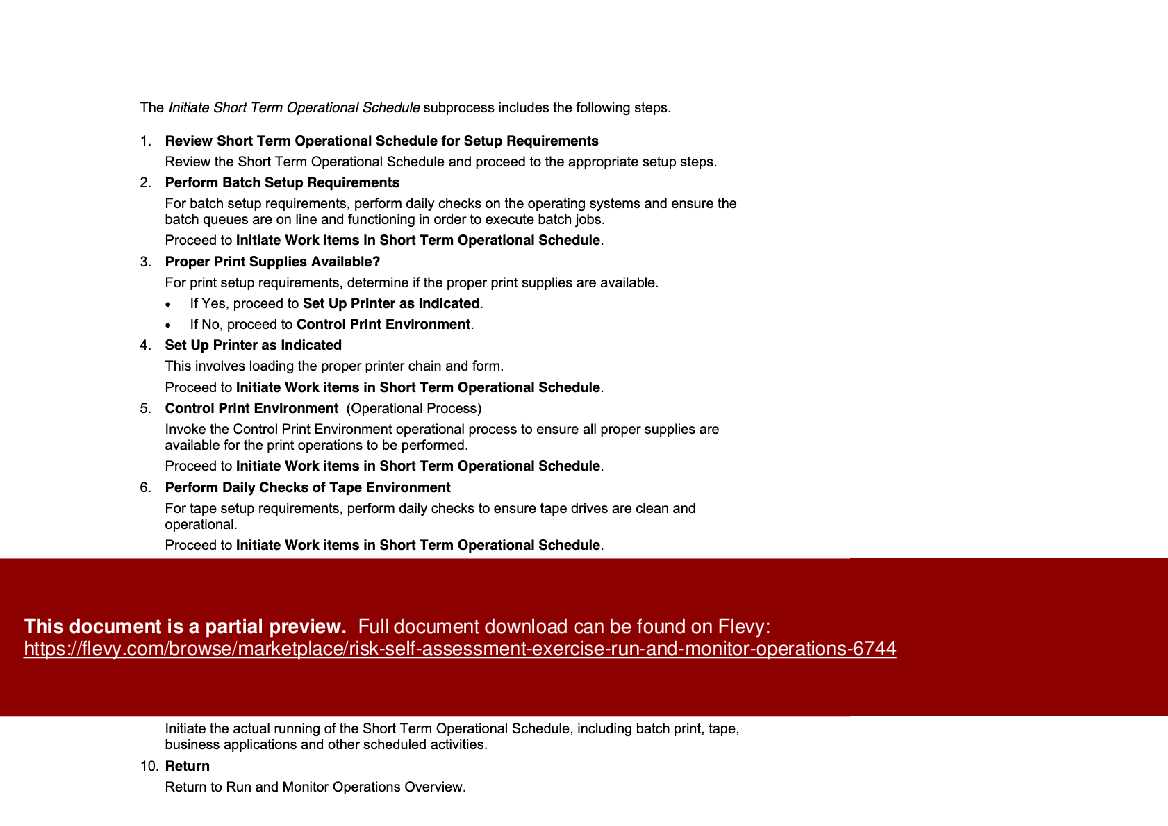
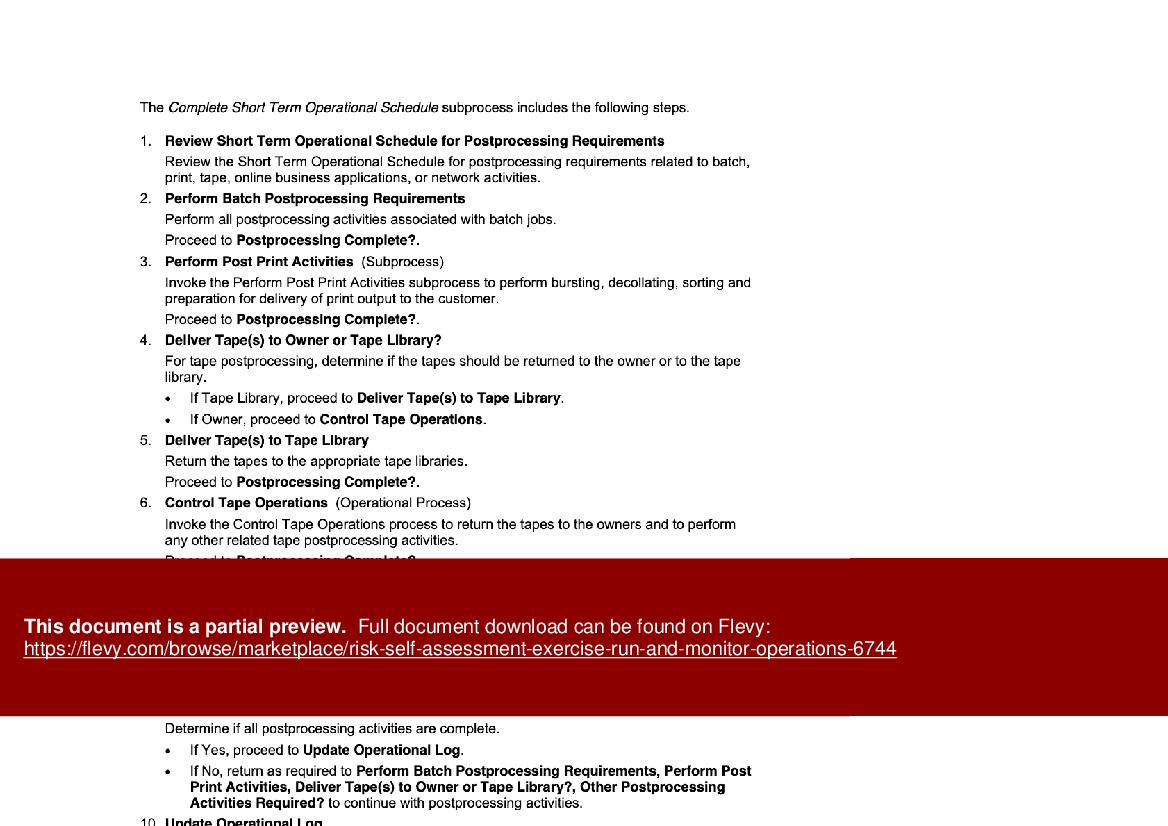
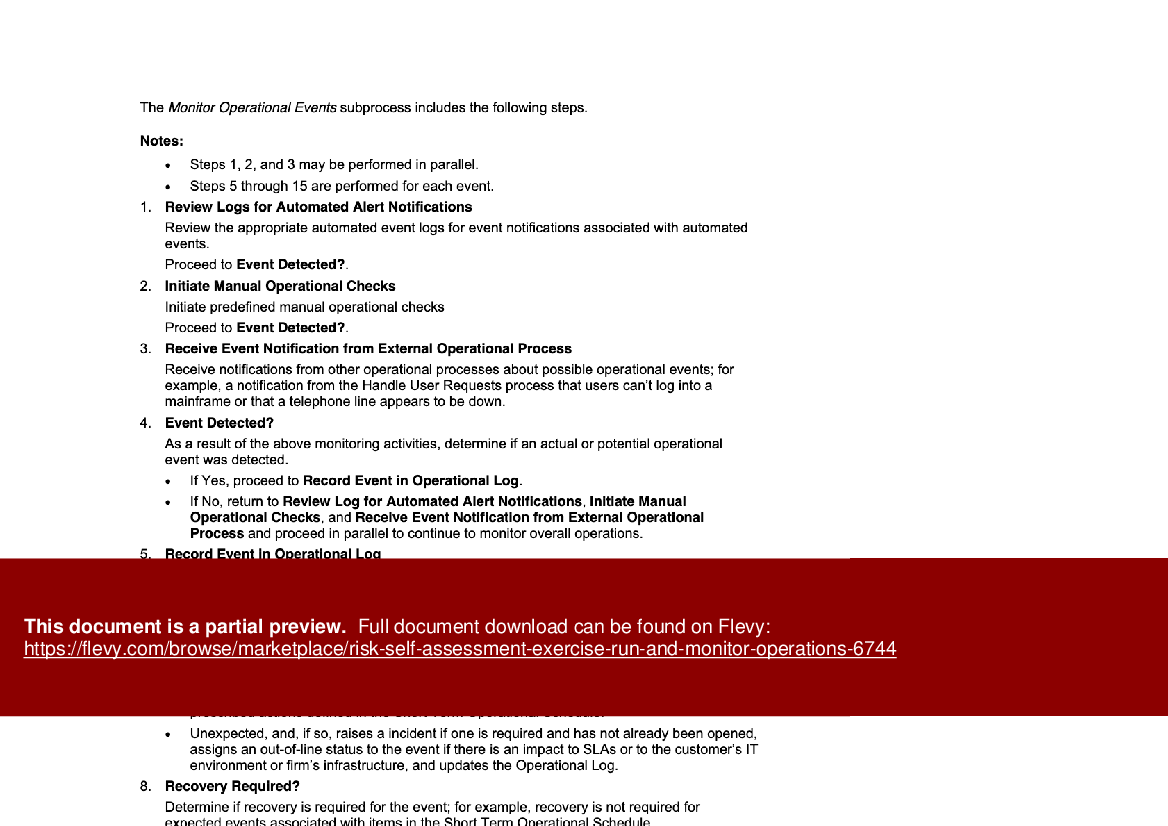
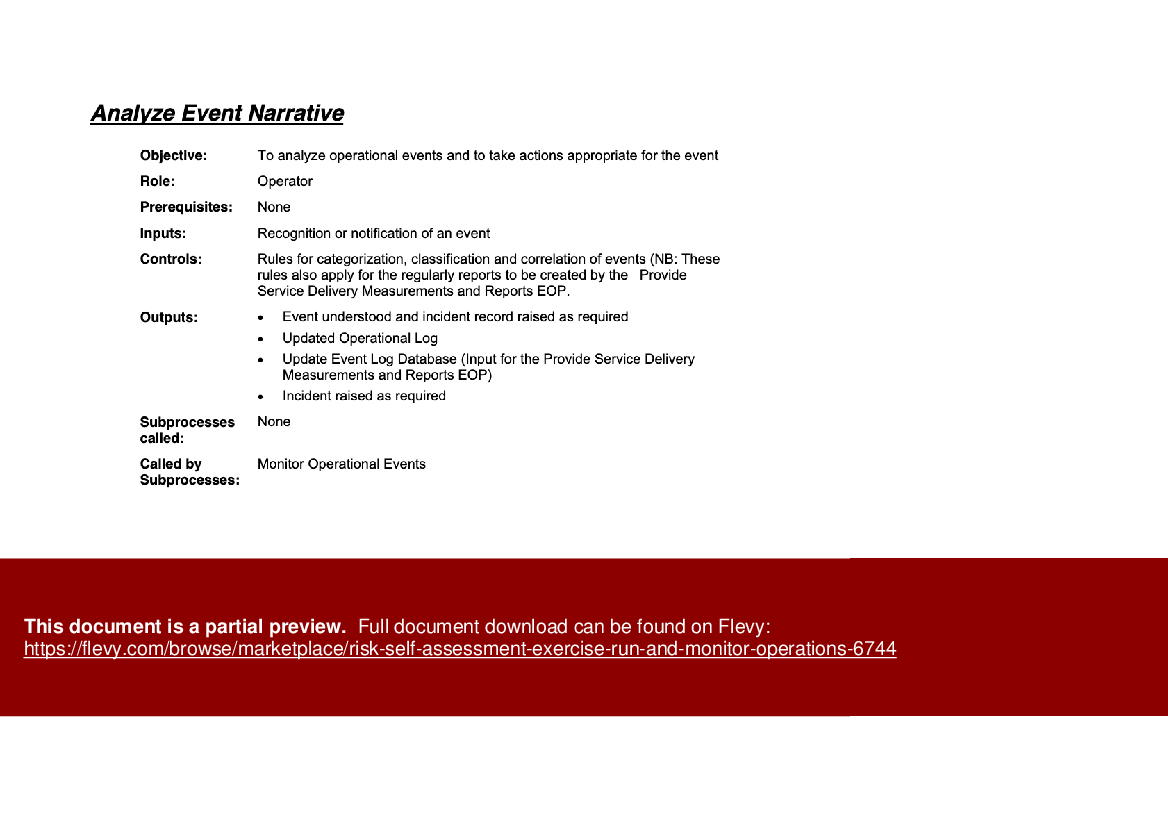
This Risk Self-Assessment Exercise is 38-page PDF based on a specific process: Run and Monitor Operations. The objective of this process is to proactively monitor, identify, and fix operational incidents and potential incidents before they adversely impact users. It includes 9 key steps (or subprocesses):

1. Initiate short term operational schedule
2. Complete short term operational schedule
3. Monitor operational events
4. Identify operational trend data
5. Any events of trends require action by other processes?
6. Handle cross process requirements
7. Prepare operational reports
8. Provide operational status
9. Perform ongoing process activities

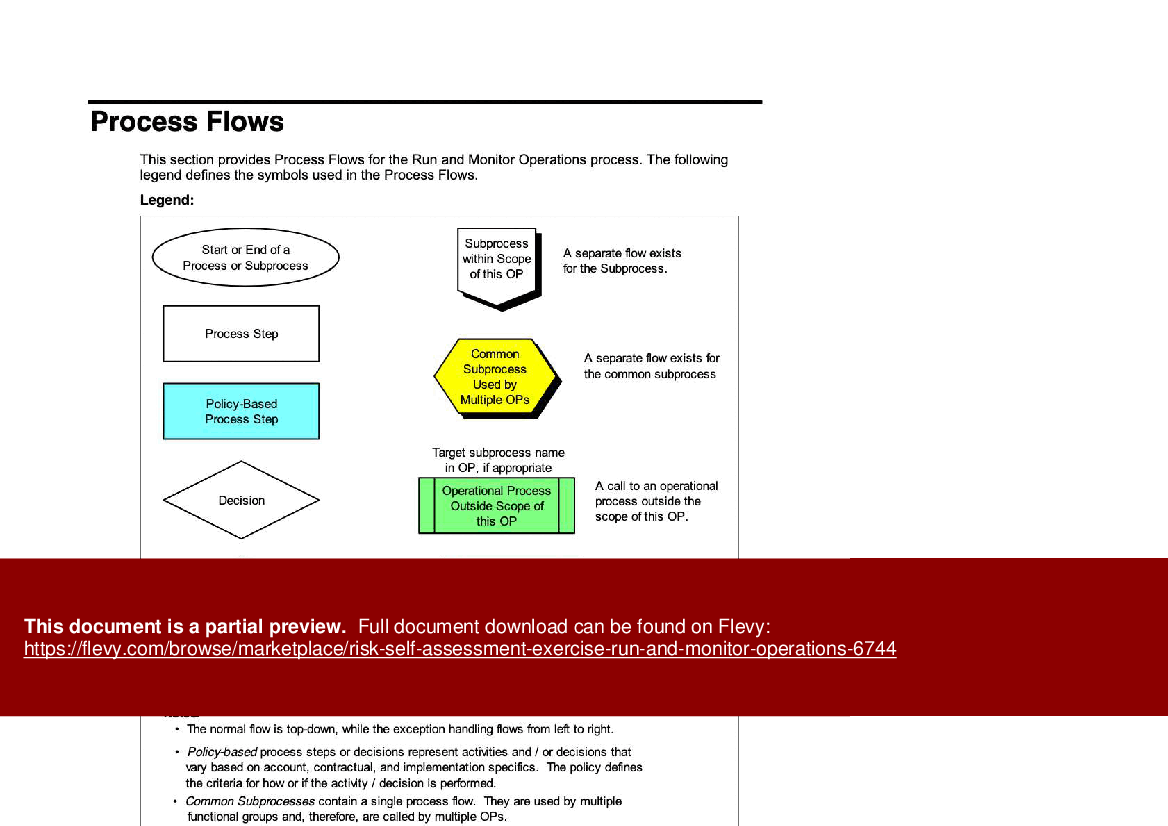
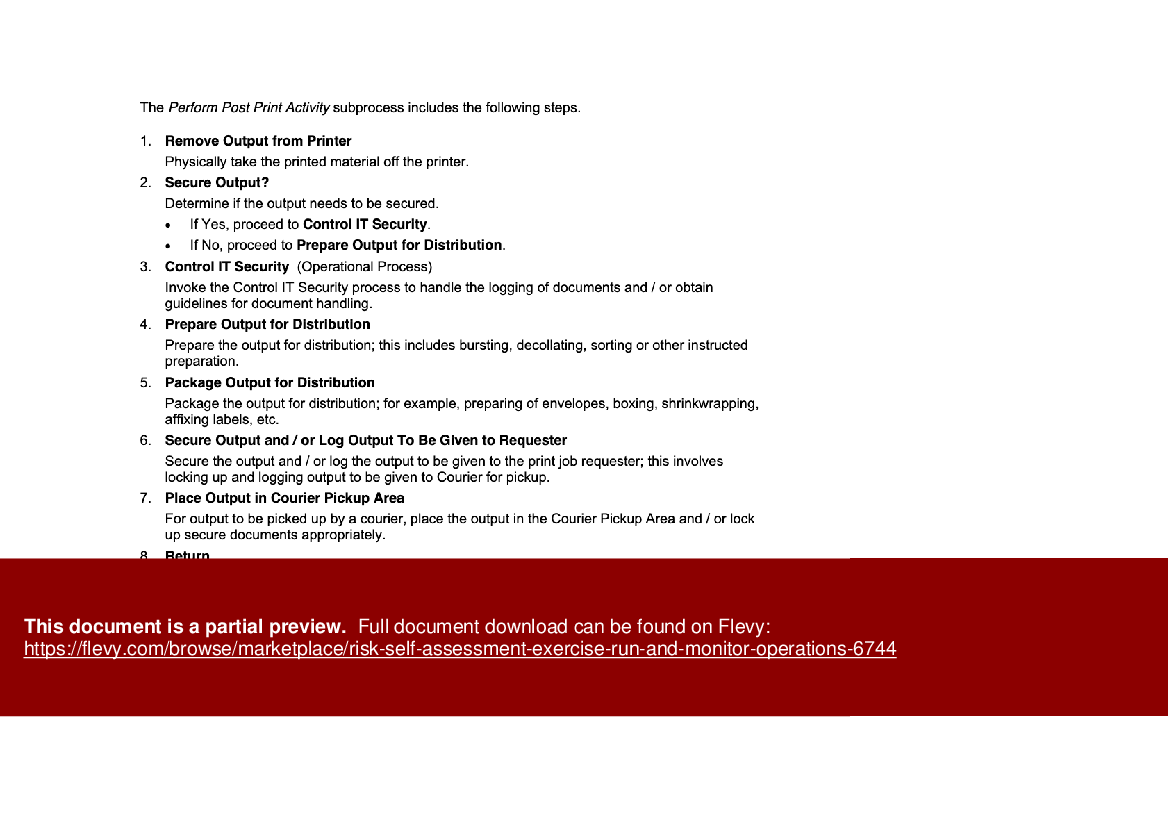
This process and all subprocesses are described in detail within this Risk Self-Assessment Exercise document, including detailed process maps.

Got a question about the product? Email us at support@flevy.com or ask the author directly by using the "Ask the Author a Question" form. If you cannot view the preview above this document description, go here to view the large preview instead.

TOPIC FAQ

What is a Run & Monitor Operations Risk Self-Assessment and what does it evaluate?

A Run & Monitor Operations Risk Self-Assessment evaluates an organization’s practices for proactively monitoring, identifying, and resolving operational incidents before they impact users. It examines current processes, gaps, and remediation actions and documents subprocesses such as monitoring operational events and preparing operational reports, across 9 key steps.

What are the typical subprocesses included in a Run & Monitor Operations process?

Typical subprocesses cover short-term operational scheduling, execution, event monitoring, trend identification, cross-process action requirements, preparing reports, providing operational status, and ongoing activities. The product describes these subprocesses in detail and organizes them into 9 key steps.

How are process maps used in operational risk self-assessments?

Process maps document workflow steps, decision points, handoffs, and control interactions to reveal gaps and cross-process dependencies. They support control testing and remediation planning; the Flevy Risk Self-Assessment Exercise provides detailed process maps for the Run & Monitor Operations process.

How does monitoring operational events differ from identifying operational trend data?

Monitoring operational events captures discrete incidents and real-time alerts, while identifying trend data aggregates events over time to reveal recurring issues or emerging risks. Both activities are described separately within the assessment’s subprocesses and linked to reporting and remediation steps in the 9-step process.

What should I look for when buying a Run & Monitor Operations self-assessment?

Prioritize coverage of end-to-end subprocesses, clear process maps, and alignment with relevant compliance frameworks (SOX, ITIL, ISO standards). The Flevy Risk Self-Assessment Exercise explicitly documents 9 subprocesses and includes detailed process maps and compliance references.

How can my internal team run a self-assessment versus hiring external help?

A self-assessment can be conducted internally using staff to map processes and identify gaps, or externally by consultants for independent validation. The document notes both approaches are valid and presents the Run & Monitor Operations process in a 38-page format to guide either internal or external execution.

I’m seeing repeated incidents that affect users—which assessment activities should I prioritize?

Prioritize monitoring operational events, aggregating and analyzing trend data to spot recurring causes, then handling cross-process requirements to assign remediation. Focused reporting and operational status updates help track fixes; these activities are central to the 9 key steps.

How do I justify purchasing a template or assessment tool for operational risk work?

Justification often rests on saving time and ensuring coverage of required subprocesses and compliance needs. Buyers typically look for documented subprocess descriptions and process maps to speed assessments; the Flevy product delivers those elements across a 38-page PDF.

Source: Best Practices in Risk Management PDF: Risk Self-Assessment Exercise (Run & Monitor Operations) PDF (PDF) Document, Boris Agranovich


$29.00
Based on work with Citibank, Bank of Tokyo Mitsubishi, and Capgemini, this assessment is developed by a Global Risk Leader and founder of the world's largest Risk Management community. SOX, ITIL, FFIEC, BS25999, ISO 17799/27001 compliant.
Add to Cart
  

ABOUT THE AUTHOR

Additional documents from author: 14

Founder at Global Risk community helping clients master risks and opportunities, adviser, Building Bridges Globally.

Entrepreneurial business leader with 25+ years of global experience in Financial Services, IT and Consulting. Worked in West & East Europe, Middle East, Asia Pacific. Advised executive teams on effective risk management strategies.

Founder of the world's premier community for ... [read more]

Ask the Author a Question

You must be logged in to contact the author.

Click here to log in Click here register

Did you know?
The average daily rate of a McKinsey consultant is $6,625 (not including expenses). The average price of a Flevy document is $65.
Bundle and save! You can save up to % with bundles!

View bundle(s)


Trusted by over 10,000+ Client Organizations
Since 2012, we have provided business templates to over 10,000 businesses and organizations of all sizes, from startups and small businesses to the Fortune 100, in over 130 countries.
AT&T GE Cisco Intel IBM Coke Dell Toyota HP Nike Samsung Microsoft Astrazeneca JP Morgan KPMG Walgreens Walmart 3M Kaiser Oracle SAP Google E&Y Volvo Bosch Merck Fedex Shell Amgen Eli Lilly Roche AIG Abbott Amazon PwC T-Mobile Broadcom Bayer Pearson Titleist ConEd Pfizer NTT Data Schwab


Read Customer Testimonials

 
"As a consulting firm, we had been creating subject matter training materials for our people and found the excellent materials on Flevy, which saved us 100's of hours of re-creating what already exists on the Flevy materials we purchased."

– Michael Evans, Managing Director at Newport LLC
 
"As a small business owner, the resource material available from FlevyPro has proven to be invaluable. The ability to search for material on demand based our project events and client requirements was great for me and proved very beneficial to my clients. Importantly, being able to easily edit and tailor "

– Michael Duff, Managing Director at Change Strategy (UK)
 
"If you are looking for great resources to save time with your business presentations, Flevy is truly a value-added resource. Flevy has done all the work for you and we will continue to utilize Flevy as a source to extract up-to-date information and data for our virtual and onsite presentations!"

– Debbi Saffo, President at The NiKhar Group
 
"Flevy is now a part of my business routine. I visit Flevy at least 3 times each month.

Flevy has become my preferred learning source, because what it provides is practical, current, and useful in this era where the business world is being rewritten.

In today's environment where there are so "

– Omar Hernán Montes Parra, CEO at Quantum SFE
 
"I like your product. I'm frequently designing PowerPoint presentations for my company and your product has given me so many great ideas on the use of charts, layouts, tools, and frameworks. I really think the templates are a valuable asset to the job."

– Roberto Fuentes Martinez, Senior Executive Director at Technology Transformation Advisory
 
"As a young consulting firm, requests for input from clients vary and it's sometimes impossible to provide expert solutions across a broad spectrum of requirements. That was before I discovered Flevy.com.

Through subscription to this invaluable site of a plethora of topics that are key and crucial to consulting, I "

– Nishi Singh, Strategist and MD at NSP Consultants
 
"My FlevyPro subscription provides me with the most popular frameworks and decks in demand in today’s market. They not only augment my existing consulting and coaching offerings and delivery, but also keep me abreast of the latest trends, inspire new products and service offerings for my practice, and educate me "

– Bill Branson, Founder at Strategic Business Architects
 
"One of the great discoveries that I have made for my business is the Flevy library of training materials.

As a Lean Transformation Expert, I am always making presentations to clients on a variety of topics: Training, Transformation, Total Productive Maintenance, Culture, Coaching, Tools, Leadership Behavior, etc. Flevy "

– Ed Kemmerling, Senior Lean Transformation Expert at PMG


Save with Bundles

This document is available as part of the following discounted bundle(s):


Customers Also Bought These Documents


Customers Also Like These Documents

Explore Related Management Topics


Your Recently Viewed Documents
Receive our FREE presentation on Operational Excellence

This 50-slide presentation provides a high-level introduction to the 4 Building Blocks of Operational Excellence. Achieving OpEx requires the implementation of a Business Execution System that integrates these 4 building blocks.